
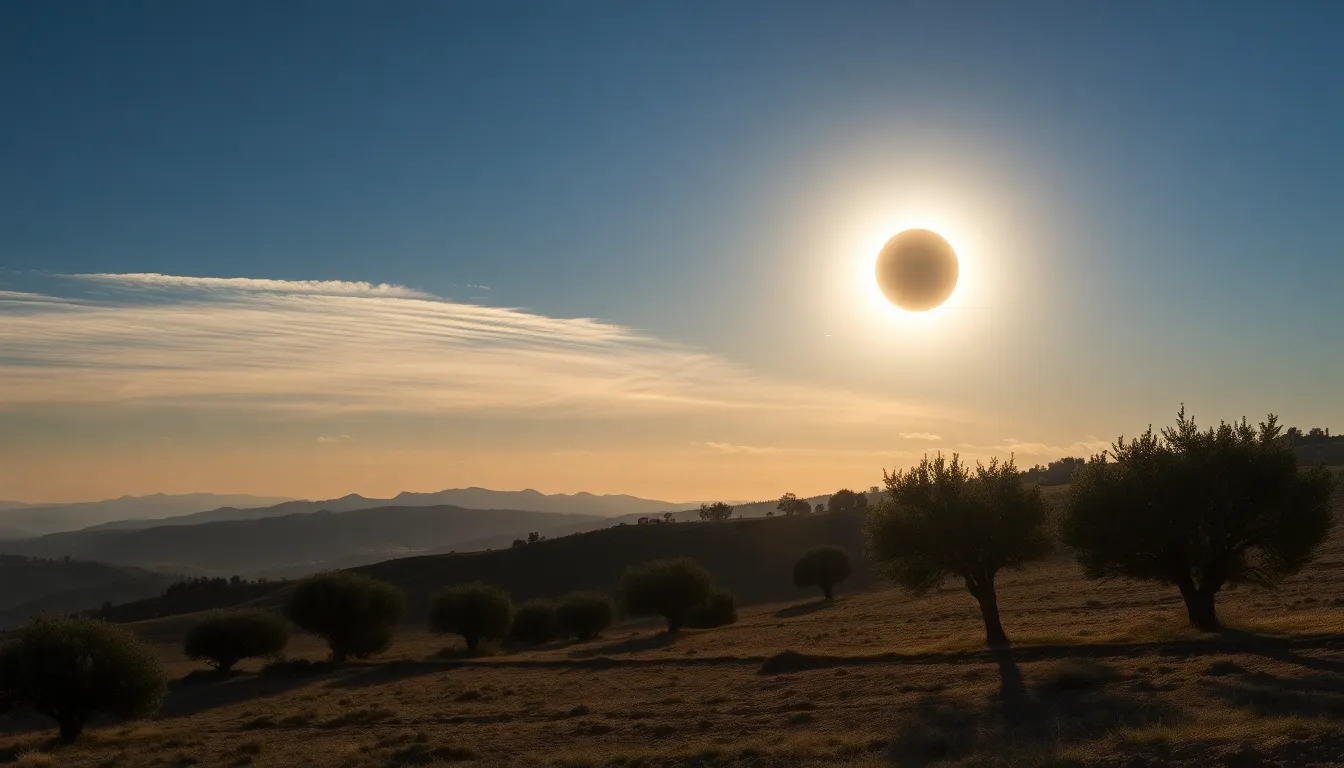
Best Cities to Watch the 2026 Total Solar Eclipse in Spain
Why the 2026 Total Solar Eclipse Is a Once-in-a-Lifetime Event for Spain
Spain will experience its first total solar eclipse in over a century on August 12, 2026, with the moon’s shadow making landfall in Galicia at 19:30 CEST before racing across the Iberian Peninsula. This extraordinary celestial event will last up to 2 minutes 18 seconds along the centerline, occurring remarkably close to sunset (~1 hour before) which will create surreal golden-hued twilight conditions. Unlike the 2027 eclipse that will mainly cross southern Spain, the 2026 path favors northern and eastern regions from A Coruña to Valencia and the Balearic Islands.Essential Eclipse Travel Logistics
Timing and Duration
Totality begins on Spain’s northwest coast at 19:30 local time (17:30 UTC), with the eclipse ending near sunset around 20:30 CEST. Maximum duration occurs near Burgos (2m18s), gradually decreasing to 1m50s in Mallorca.Path of Totality Geography
The 185km-wide moon shadow crosses: – Galicia (Rías Baixas coast) – Castile-León (Zamora, Valladolid, Burgos) – Aragón (Zaragoza outskirts) – Valencia region (including city center) – Ibiza and MallorcaTransportation Considerations
August is peak tourist season, so book at least 12 months in advance. Key tips: – Fly into Santiago de Compostela (SCQ), Madrid (MAD), or Valencia (VLC) – High-speed AVE trains connect Madrid to eclipse zones in 2-3 hours – Rental cars provide flexibility but expect heavy traffic on eclipse dayTop 5 Spanish Cities for Eclipse Viewing
1. A Coruña, Galicia – First Contact Point
The eclipse makes landfall here with 1m45s totality at sunset over the Atlantic. Prime spots: – Tower of Hercules (UNESCO lighthouse) – San Antón Castle’s coastal walls – Monte de San Pedro panoramic park2. Burgos, Castile-León – Longest Totality
This medieval city offers 2m18s darkness beneath its Gothic cathedral spires. Optimal viewing at: – Mirador del Castillo hilltop – Cartuja de Miraflores monastery – Parque de la Isla riverside3. Valladolid – Urban Convenience
With 2m10s totality, this accessible city provides: – Science Museum eclipse programming – Campo Grande park’s open spaces – Plaza Mayor’s historic square4. Valencia – Coastal Finale
Experience 1m55s totality over the Mediterranean at: – City of Arts and Sciences complex – Malvarrosa Beach – Turia Gardens’ 9km greenbelt5. Palma de Mallorca – Island Magic
The Balearics offer 1m50s totality with unique vantage points: – Bellver Castle’s circular fortress – Cap de Formentor cliffs – Palma Cathedral’s sea-facing terraceEclipse-Themed Hotel Packages
Several properties are creating special programs: – **Parador de Santiago de Compostela**: Astronomy dinners in this historic hotel (€350/night) – **NH Palacio de Burgos**: Roof terrace viewing with astronomer guides (€290/night) – **Hotel Las Arenas Valencia**: Beachfront eclipse brunch package (€420/night) – **Castillo Hotel Son Vida Mallorca**: Luxury hilltop experience (€1,100/night) Budget alternatives include: – Ibis Styles Valladolid (€120/night) – Hostal Rías Bajas in A Coruña (€85/night)Regional Eclipse Cuisine Experiences
Galicia
Time your eclipse with “hora do vermú” (vermouth hour) featuring: – Pulpo á feira (octopus) – Albariño white wine – Tarta de Santiago almond cakeCastile-León
Post-eclipse dinners should include: – Cochinillo asado (roast suckling pig) – Ribera del Duero wines – Yemas de Burgos egg yolk sweetsValencia
Sunset eclipse pairings: – Horchata with fartons pastries – Paella overlooking the sea – Agua de Valencia cocktailExpert Eclipse Viewing Tips
Eye Safety
– ISO 12312-2 certified glasses are mandatory except during totality – Local astronomy clubs will distribute free glasses in main squares – Avoid camera/viewfinder use without proper solar filtersPhotography Advice
For the unique sunset eclipse: – Use 200-400mm lens with solar filter – Bracket exposures (-2 to +2 stops) – Capture foreground landscapes in golden lightWeather Contingencies
August typically offers 80% clear skies, but have backup plans: – Galicia: Head inland to Ourense if cloudy – Valencia: The Science Museum planetarium offers live streams – Mallorca: Book flexible boat tours to chase clear skiesBudget Planning for Eclipse Travel
Cost Breakdown (Per Person)
– Accommodation: €80-400/night – Transport: €30-150/day (car rentals spike during eclipse week) – Food: €25-60/day – Activities: €15-100 for guided eclipse experiencesMoney-Saving Tips
– Stay in smaller towns near the path (Benavente instead of Valladolid) – Book apartments with kitchens via VRBO – Use BlaBlaCar for ride-sharing between cities – Attend free municipal viewing partiesEclipse Travel FAQs
When should I book accommodations?
Hotels along the centerline will sell out 18-24 months in advance. Reserve by January 2025 at the latest.Can I see the eclipse from Madrid or Barcelona?
No – both cities experience only a 90% partial eclipse. You must be within the 185km totality path.What if it’s cloudy?
The eclipse shadow creates dramatic darkness even through clouds, but for clear views, be prepared to drive 50-100km along the path.Are there organized eclipse tours?
Yes, several reputable operators: – Sky & Telescope: 8-day Castile-León itinerary (€2,800) – Eclipse Travel: Mallorca yacht viewing (€1,950) – Spanish astronomy societies: Affordable bus trips from major citiesHow does this compare to the 2027 eclipse?
The 2026 event has shorter totality but crosses culturally rich northern regions with milder August weather. The 2027 eclipse will last nearly 5 minutes but occur in southern Spain’s extreme summer heat. # The Complete Guide to Spain’s 2026 Total Solar Eclipse: Weather, Culture & Expert PlanningWeather Patterns Across the Eclipse Path
August weather varies dramatically along the eclipse’s trajectory:Galicia (Atlantic Coast)
– Probability of clear skies: 65% – Average temperature: 22°C (72°F) – Coastal microclimates mean fog frequently burns off by afternoon – **Best backup locations**: Move inland to Ourense (75% clear sky probability)Castile-León (Northern Plateau)
– Clear sky probability: 80% – Temperature: 28°C (82°F) – Stable continental climate with minimal cloud cover – **Unique advantage**: High elevation (700-900m) reduces atmospheric distortionValencia & Balearics
– Clear sky probability: 85% – Temperature: 30°C (86°F) with pleasant sea breezes – Least chance of cloud interference in Spain – **Special consideration**: Coastal humidity may affect optical equipmentCultural Events Surrounding the Eclipse
Local communities are planning extraordinary programming:Galician Celestial Traditions
– **Noite Meiga** (Witch Night) festivals in Pontevedra (Aug 10-12) – Special Camino de Santiago eclipse pilgrim routes – Celtic astronomy lectures at Universidade de SantiagoCastilian Medieval Celebrations
– Burgos Cathedral’s “Eclipse Mass” with Gregorian chant – Valladolid’s “Darkness Procession” recreating 1905 eclipse – Traditional lantern crafting workshopsValencian Light Festivals
– “Foc i Llum” (Fire & Light) installations at Ciutat de les Arts – Paella cooking competitions timed to totality – Historical recreations of King Alfonso XIII’s 1905 eclipse observationsDetailed Accommodation Guide
Luxury Options Along the Centerline
1. **Parador de Baiona (Galicia)** – Fortress overlooking eclipse landfall point – €450/night including astronomer-led cocktail reception 2. **Hospes Palacio de San Antón (Burgos)** – 16th-century palace with private viewing terraces – €380/night with eclipse brunch 3. **Barceló Valencia** – Rooftop infinity pool in path of totality – €520/night including protective eyewearMid-Range Family Stays
– **Hotel Zenit Dos Infantes (Zamora)**: €150/night, children’s astronomy activities – **Sercotel Corona de Aragón (Zaragoza)**: €135/night, eclipse wake-up service – **Hostal Gastronómico San Millán (Logroño)**: €110/night, wine country eclipse pairing menuBudget & Alternative Options
– Monastery stays: €50-75/night (Santo Domingo de Silos) – Camping areas: €15-30 (official eclipse campsites opening 2025) – Rural casas: €80-120 (many with telescopes)Extended FAQ Section
What makes Spain’s 2026 eclipse unique?
This marks the first total solar eclipse crossing Spain’s northern regions since 1905. The sunset timing creates unparalleled photographic opportunities with golden landscapes transitioning to sudden darkness.How does totality differ from a partial eclipse?
Within the 185km-wide path: – Day becomes night with visible stars – Temperature drops 5-8°C – Animals exhibit nighttime behaviors – The sun’s corona becomes visible to naked eyeWhat about accessibility for disabled travelers?
Several cities have designated viewing zones: – Burgos: Plaza Mayor with wheelchair ramps – Valencia: Accessible beach walkways – Special audio descriptions in GaliciaCan I combine eclipse viewing with other astronomy events?
Yes! The Perseid meteor shower peaks August 11-13. Recommended dark sky reserves: – Monfragüe National Park (Extremadura) – Montsec Astronomical Park (Catalonia) – La Palma Canary Islands (post-eclipse extension)What transportation challenges should I anticipate?
Critical considerations: – Rental cars will require 4+ day minimum bookings – AVE trains may add special eclipse routes – Gas stations near totality path may experience shortagesAre there special passport or visa requirements?
Standard Schengen rules apply, but: – Expect increased border checks due to crowds – Carry printed accommodation confirmations – EU citizens should bring EHIC health cardsCloudy Weather Contingency Plans
Real-Time Adjustment Strategies
– Download Windy.com and Solar Eclipse Timer apps – Pre-identify highway pullouts along the centerline – Connect with local astronomy clubs’ WhatsApp groupsProfessional Forecasting Services
Several organizations will provide updates: – AEMET (Spanish Met Office) 72-hour cloud forecasts – EclipseChaser private meteorologist team – University of Salamanca’s eclipse weather centerTransportation Fallbacks
Keep these options available: – Motorcycle rentals (can quickly move 50-100km) – Pre-booked taxis with eclipse clauses – Helicopter tours from major cities (€1,500+)Photography Deep Dive
Unique Sunset Eclipse Techniques
– Use graduated ND filters to balance landscape lighting – Program intervalometers for 15-second captures – Focus stacking will be essential for foreground elementsRecommended Gear List
1. Camera with manual mode 2. 400mm+ telephoto lens 3. Sturdy tripod with sandbag weights 4. Multiple backup batteries 5. Solar filter for partial phases 6. Wide-angle for landscape contextFinal Planning Checklist
12 Months Before (Now)
– Book cancellable accommodations – Join eclipse-focused Facebook groups – Begin practicing solar photography6 Months Before
– Secure transportation reservations – Purchase eclipse glasses (ISO 12312-2 certified) – Learn basic Spanish astronomy terms1 Month Before
– Finalize weather contingency plans – Pack multiple clothing layers – Download offline maps of totality pathEclipse Day
– Arrive at viewing site 3 hours early – Set up equipment 1 hour before first contact – Enjoy totality with your naked eyes (safely) This extraordinary celestial event offers not just astronomical wonder but a profound cultural experience across Spain’s diverse regions. With careful planning that accounts for weather variables, transportation logistics, and local traditions, your 2026 eclipse journey will create memories to last a lifetime. The next comparable totality in Spain won’t occur until 2081 – making this truly a once-in-a-lifetime opportunity.Eclipse Glasses & Gear
Affiliate links. As an Amazon Associate we earn from qualifying purchases.
📖 También te puede interesar
🛡️ ¿Necesitas gafas de eclipse homologadas?
Protege tus ojos con gafas certificadas ISO 12312-2 para el eclipse del 12 de agosto de 2026.
Ver Guía Completa de Gafas Homologadas
